

How to Host a Successful AI Hackathon at a Conference Center
Why AI Hackathons Have Become a Staple of the Bay Area Tech Calendar
AI hackathons have earned their place as one of the most productive formats in the Bay Area technology community. They compress weeks of exploratory development into a single intense gathering. They surface creative solutions that structured product cycles rarely produce. And they create a shared sense of energy and purpose that participants talk about long after the event ends.
For AI companies, hosting a hackathon is also a strategic move. It builds community around your platform or API, attracts developer talent, generates genuine product feedback, and positions your organization as a hub of innovation. The format works equally well for large enterprise teams running internal innovation sprints and for companies inviting the broader developer community to build on their technology.
Start with a Clear Problem Statement
The most successful AI hackathons give participants a clear challenge to rally around. An open-ended prompt like “build something with AI” produces scattered results and unfocused energy. A specific problem statement gives teams direction without limiting creativity. It also makes judging more meaningful and outcomes easier to evaluate.
Your problem statement should connect directly to something your organization genuinely cares about. If you are an AI infrastructure company, challenge participants to build something that pushes the limits of your platform. If you are working in a specific vertical like healthcare or climate, frame the challenge around a real problem in that space. The more authentic the challenge, the more invested participants will be in solving it.
Design the Space Around How Hackers Actually Work
Hackathon participants do not work like conference attendees. They need long uninterrupted stretches of focus time, reliable power and connectivity at every seat, and spaces that allow small teams to collaborate without disturbing others. A venue that works beautifully for a keynote presentation requires real configuration work to support a 24-hour hackathon.
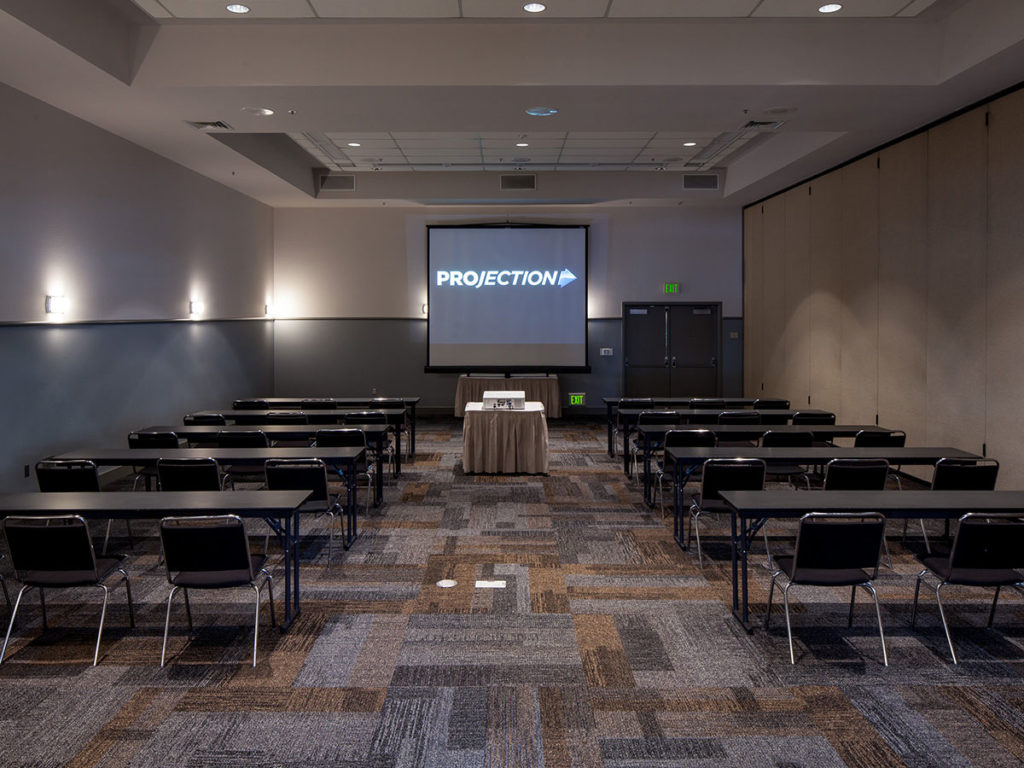
South San Francisco Conference Center’s flexible floor plans make it possible to design a hackathon environment that serves how participants actually work. Large open areas accommodate team workstations. Smaller breakout rooms give teams that need quiet focus a place to retreat. Common areas create natural gathering points for the informal conversations and cross-team interactions that often spark the best ideas.
Connectivity and Power Are Non-Negotiable
A hackathon lives or dies on its infrastructure. Participants are running local models, pushing to cloud environments, pulling datasets, and collaborating on shared codebases simultaneously. The network load is significant and sustained. Unlike a conference where connectivity demands peak during breaks, a hackathon puts continuous pressure on the infrastructure for its entire duration.
Work closely with your venue to ensure dedicated bandwidth is available for the event. Confirm that power access is distributed generously throughout the working areas. Nothing derails a hackathon faster than teams hunting for extension cords or fighting over a single ethernet port. South San Francisco Conference Center’s enterprise-grade infrastructure is built to handle exactly this kind of sustained, high-demand technical load.
Build a Schedule That Balances Focus and Energy
The best hackathon schedules protect participant focus while also creating moments that build community energy throughout the event. An opening session that clearly communicates the challenge, introduces mentors, and fires up the room sets the right tone. Regular but brief check-ins keep teams accountable without interrupting their flow. A well-timed social break mid-event gives participants a chance to recharge and connect with other teams.
Mentorship sessions are one of the most valuable elements of a well-run AI hackathon. Giving participants access to technical experts, domain specialists, and product leaders at scheduled intervals accelerates the quality of what gets built. The best mentors do not solve problems for teams. They ask the right questions and point teams toward resources they had not considered.
Make the Demo and Judging Experience Count
The final demo session is the culmination of everything participants have worked toward. It deserves the same production quality as any other main stage event. A clear presentation format, a fair and transparent judging process, and an audience that is genuinely engaged all contribute to a closing experience that feels worthy of the effort teams have invested.
Choose judges who bring diverse perspectives. Technical depth matters, but so does domain expertise and product sense. Brief judges in advance on what to look for and how to provide feedback that is constructive rather than purely evaluative. Participants who leave a hackathon feeling that their work was seen and genuinely considered are far more likely to engage with your organization again.
The Value Extends Well Beyond the Event
What gets built at an AI hackathon rarely ships directly into production. But that is not the point. The ideas surfaced, the talent identified, the community connections formed, and the signal generated about what developers find most compelling about your platform are all outputs with lasting strategic value. The best hackathon organizers think carefully about how to capture and act on those outputs after the event ends.
South San Francisco Conference Center has the space, infrastructure, and event support experience to help you run an AI hackathon that participants remember.
If you are planning an AI hackathon or developer event in the Bay Area, contact us today to request a proposal and start building something great.